






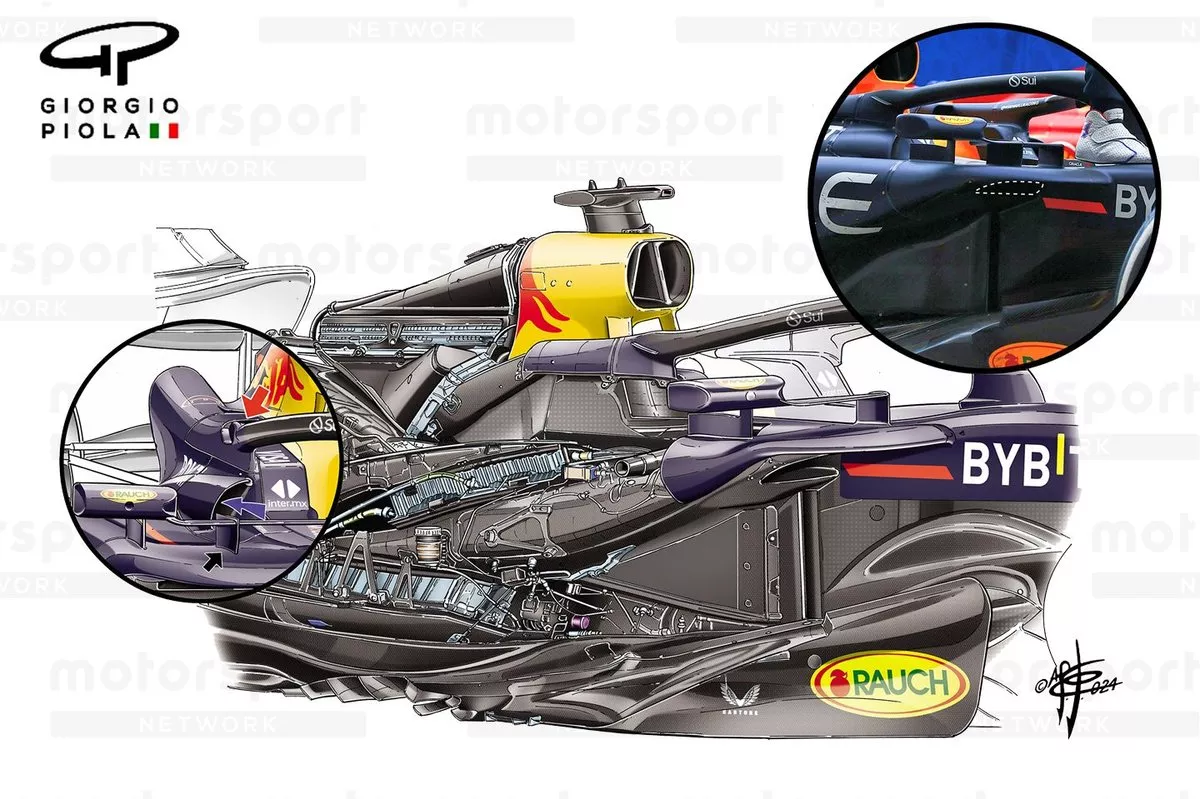

Alright, F1 fam, buckle up! Today we’re diving into the most underrated, unsung hero of Formula 1 engineering—the cooling systems and the relentless pursuit of thermal efficiency. Forget DRS, forget tire strategy for a second—because if you can’t keep your car cool, you’re not even making it to the chequered flag. And trust me, as a Red Bull fan who’s watched more radiators explode than fashion shows with my girlfriend, I know the pain. Let’s get into the drama, the genius, and the sweat (literally) behind the coolest tech in the hottest sport on earth.
- “It’s Getting Hot in Here!” – The F1 Heat Problem
- Cool Runnings: The Evolution of F1 Cooling Systems 🧊
- The Science of Staying Cool: How It Actually Works 🛠️
- Thermal Efficiency: The Secret Sauce of Modern F1 🥫
- When Things Go Wrong: The Meltdown Moments 😱
- Red Bull’s 2024 Cooling Revolution: The Hidden Power of Placement 🥤
- The Human Factor: Driver Cooling in 2025 🧑🚀
- Why It Matters: F1 Cooling Tech Changing the World 🌍
“It’s Getting Hot in Here!” – The F1 Heat Problem
Picture this: You’re strapped into a carbon fiber rocket, 1000 horsepower screaming behind your back, track temps hitting 60°C, and you’re wearing a fireproof suit that’s basically a portable sauna. Now imagine all that heat isn’t just making you sweat—it’s threatening to melt your engine, fry your electronics, and turn your brakes into molten cheese. Welcome to the world of F1 cooling, where every degree counts and every engineer is basically a part-time firefighter.
The modern F1 car is a heat factory. The combustion engine, turbo, hybrid systems, gearbox, hydraulics, and even the electronics—all of them are pumping out insane amounts of heat. According to Motorsport Technology, With 1000hp on tap from the combustion engine and hybrid systems combined, an F1 car puts out an incredible amount of heat. Keeping this and its attendant systems cool is a major task for the team, both at the design stage and when at the track.
And if you think it’s just about the engine, think again. The hybrid era brought new headaches: batteries, MGU-K, MGU-H, and control electronics all have their own cooling needs, running at different temps and requiring different fluids. It’s like trying to keep a pizza oven, a freezer, and your phone all at the perfect temperature—while driving at 350 km/h.
Cool Runnings: The Evolution of F1 Cooling Systems 🧊
Let’s take a quick pit stop through history, because F1 cooling has always been a wild ride. Back in the 1950s and 60s, cars had basic radiators and sometimes even air-cooled engines. But as engines moved to the middle of the car and power increased, so did the need for smarter cooling.
The 1978 Brabham BT46B “fan car” is legendary. Gordon Murray’s design used a massive fan to suck air through the radiators and under the car, giving both insane cooling and ground effect downforce. It won its only race and was banned immediately—classic F1, right?
Turbocharged monsters of the 80s brought intercoolers and more complex ducting. But the real revolution came with the hybrid era. Now, teams like Mercedes, Ferrari, and Red Bull are obsessed with integrating cooling into the car’s aerodynamics. Every vent, duct, and louvre is a trade-off between keeping things cool and slicing through the air.
And let’s not forget the latest twist: driver cooling kits. After the 2023 Qatar Grand Prix nearly turned drivers into roast chickens, the FIA mandated new cooling systems for drivers in extreme heat. Welcome to 2025, where even the humans need a pit stop for cooling tech!
The Science of Staying Cool: How It Actually Works 🛠️
Alright, time to nerd out. F1 cooling is all about moving heat from where you don’t want it (engine, electronics, brakes) to where you don’t care (the air behind the car). Here’s the basic playbook:
- Radiators & Heat Exchangers: Water/glycol mix circulates through the engine, picking up heat, then dumps it into the radiator, where airflow carries it away. Oil coolers do the same for engine and gearbox oil.
- Intercoolers: For turbo engines, compressed air gets super hot. Intercoolers cool it down before it hits the combustion chamber, boosting power and reliability.
- Ducts, Louvres, and Chimneys: These guide airflow to hot spots. But every hole in the bodywork adds drag, so teams are constantly balancing cooling vs. speed.
- Advanced Materials: Carbon fiber, titanium, and exotic alloys help manage heat and keep weight down.
- Active Suspension & Aero: Some teams even tweak ride height and aero surfaces to optimize airflow for cooling on the fly.
As Racecar Engineering puts it:
The instantaneous gas temperature at the point of combustion in a modern Formula 1 engine can reach up to 2,600°C, which is half as hot as the surface of the sun. Add to that the temperature of components such as the Energy Store and the Turbocharger and you begin to realise just how much internal temperature an F1 car can generate.
Thermal Efficiency: The Secret Sauce of Modern F1 🥫
Here’s where it gets spicy. Thermal efficiency is the percentage of fuel energy that actually moves the car, instead of being wasted as heat. In the V8 era, F1 engines hit about 29% thermal efficiency. With the hybrid V6 turbos? Over 50%. That’s not just good—it’s world-beating. As Formula1.com brags, The latest V6 turbo-hybrid power unit… 20% more power, and yet it produces 26% less in the way of CO2 emissions… thermal efficiency now stands at over 50%.
How did they do it? Miniaturization, turbocharging, direct fuel injection, and—most importantly—energy recovery. The MGU-H and MGU-K systems capture waste heat and kinetic energy, turning it into extra power instead of letting it escape as useless heat. It’s like recycling, but for horsepower.
The MGU-H captures the heat energy contained in exhaust gases and transforms it into electrical energy. Last but not least, for energy storage, F1 cars have a lithium-ion battery pack that stores the electrical energy generated by the ERS.
Lucas de Greiff
This relentless push for efficiency isn’t just about going faster. It’s about surviving the race, meeting strict fuel limits, and—let’s be honest—making the sport look good for the eco-conscious crowd.
When Things Go Wrong: The Meltdown Moments 😱
Let’s not sugarcoat it—when cooling fails, it’s carnage. Engines overheat, electronics fry, brakes fade, and sometimes the car just gives up and parks itself. Remember those dramatic radio messages? Engine temps critical, box box box! Or the infamous My drink is not working! from Lewis Hamilton in Singapore, which became an instant meme but also highlighted how brutal the heat can be for drivers.
The late Ayrton Senna was famously known to lose up to 4 kilograms of body weight during particularly grueling races — that’s nearly 9 pounds of pure sweat, enough to fill a decent-sized water bottle.
Formula One Forever, Medium
Teams have to make split-second decisions: slow down to save the car, tweak the fuel mix, or risk it all for a few more laps. Sometimes, they even have to retire a car that’s running in the points, just to avoid a catastrophic failure. It’s heartbreak, strategy, and engineering all rolled into one.
Red Bull’s 2024 Cooling Revolution: The Hidden Power of Placement 🥤
Okay, I have to shout out my team here. In 2024, Red Bull once again led the pack with a radical overhaul of their cooling system. According to Heat Exchanger World, The most innovative one seems, once again, to be Red Bull who has chosen to thoroughly overhaul its cooling system. They went for a water/air intercooler setup, which is more complex but highly efficient. The placement of heat exchangers became a secret weapon, allowing tighter packaging and better aero without sacrificing reliability.
Every team has their own tricks—some go for bigger radiators, others for clever ducting or even heat shields. But the goal is always the same: keep the car cool, keep the power up, and don’t let the competition see your secrets.
The Human Factor: Driver Cooling in 2025 🧑🚀
Let’s not forget the gladiators in the cockpit. Driver cooling has come a long way from ice packs stuffed into racing suits. In 2025, after some scary moments in recent years, the FIA now mandates advanced driver cooling kits for extreme heat races. These systems, inspired by military and medical tech, circulate chilled fluid through vests or even pump cool air into the helmet.
Rini’s PCS-Auto, introduced in 2015, was a game-changer. Unlike its medical predecessor, it could be wired directly into a race car’s 12V electrical system, eliminating the need for separate batteries. More importantly, it actually worked for the duration of a race, maintaining consistent cooling without the weight penalties of ice-based systems.
It’s not just about comfort—it’s about survival. Drivers can lose kilos of sweat in a single race, and heat exhaustion is a real danger. The new systems mean fewer DNFs from dehydration and more epic battles to the finish.
Why It Matters: F1 Cooling Tech Changing the World 🌍
Here’s the kicker: all this F1 cooling wizardry isn’t just for show. The same tech is making its way into road cars, hypercars, and even public transport. Mercedes-AMG’s Project One uses an F1-derived power unit, and energy recovery systems are now in everything from buses to supermarket fridges.
F1’s obsession with thermal efficiency is making the world cleaner, greener, and—let’s be honest—a lot cooler. So next time you see a hybrid on the street, remember: it owes a little bit of its DNA to the mad scientists of the paddock.