



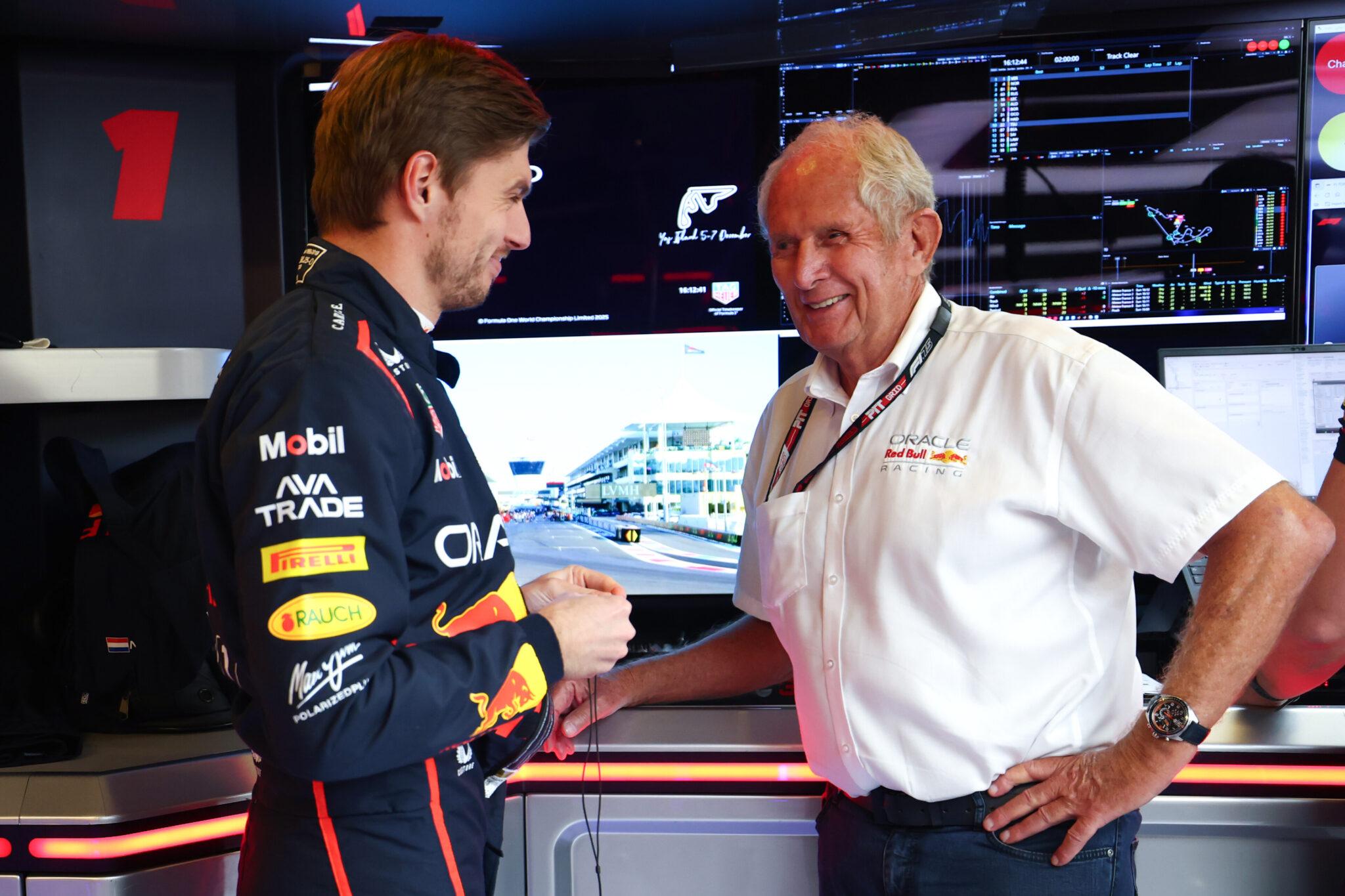

If you’ve spent any time in the Formula 1 paddock over the last two decades, you’ll know that Helmut Marko’s presence was never subtle. He was the man with the sharpest tongue, the coldest stare, and—let’s be honest—the most intimidating “I know something you don’t” smirk in the business. Now, as of December 2025, the lion of Graz has hung up his Red Bull overalls for the last time. And, as with everything in Marko’s career, his exit is as layered, controversial, and emotionally charged as the man himself.
The Architect of Red Bull’s Empire
Let’s get the obvious out of the way: Helmut Marko is not your average F1 retiree. He’s not a man who will be remembered for a handful of podiums or a single, glorious season. No, Marko’s legacy is measured in world championships, in the careers he made (and broke), and in the way he transformed Red Bull from a fizzy drink marketing experiment into a Formula 1 juggernaut.
Marko’s journey began long before Red Bull’s first lap in anger. Born in Graz in 1943, he was a childhood friend of Jochen Rindt, the 1970 world champion. Marko’s own racing career was cut short in 1972 by a freak accident at the French Grand Prix, which left him blind in one eye. But if you thought that would slow him down, you clearly never met the man. He went on to win Le Mans in 1971, managed drivers like Gerhard Berger, and eventually became the mastermind behind Red Bull’s driver development program—a program that would change the face of F1 forever.
The Red Bull Years: Talent, Turmoil, and Triumph
When Dietrich Mateschitz handed Marko the keys to Red Bull’s racing future in 2005, few could have predicted the scale of what was to come. Marko was the architect, the kingmaker, the man who could spot a future champion in a sea of hopefuls. Sebastian Vettel, Daniel Ricciardo, Max Verstappen—these are not just names, they are Marko’s legacy.
Under his stewardship, Red Bull claimed six Constructors’ Championships and ushered in two of the sport’s most dominant drivers: Vettel and Verstappen. Marko’s eye for talent was matched only by his ruthlessness. If you were a Red Bull junior, you lived in constant fear of the Sunday night phone call. For every Vettel, there was a Jean-Éric Vergne or a Brendon Hartley—talents who found themselves on the wrong side of Marko’s infamous “sink or swim” philosophy.
But it worked. Red Bull became the benchmark for junior driver programs, and Marko’s fingerprints are all over the modern F1 grid.
The Final Season: Shadows and Storms
So why now? Why does the man who once said, “Let’s wait for the third race before calling anyone a legend,” decide to step away after 20 years at the helm? The official Red Bull press release would have you believe it was all about “narrowly missing out on the world championship this season,” a poetic nod to Max Verstappen’s failed bid for a fifth consecutive title. Marko, true to form, called this “full of nonsense.”
“I don’t want to go into too much detail, but I didn’t read that nonsense press release. Let’s just say that a lot has changed at the team in a short period of time. You think you know people well, but in the end that turns out not to be the case… No, I really won’t say more. And that fifth title wouldn’t have changed anything anyway.”
— Helmut Marko (GPBlog)
The truth, as always with Marko, is more complicated. The 2025 season was a cauldron of internal politics, shifting alliances, and public controversies. Christian Horner, the team principal who had been Marko’s partner-in-crime since day one, was ousted mid-season. The team’s identity, once so tightly bound to the Mateschitz-Mark-Horner axis, began to unravel.
And then there was the Antonelli incident. Marko’s comments about Mercedes rookie Kimi Antonelli, which contributed to a social media firestorm and even death threats against the young Italian, cast a shadow over his final months. It was a reminder that Marko’s bluntness, once his greatest asset, could also be his undoing.
The Phone Call That Wasn’t
If you want a window into the emotional heart of this story, look no further than Marko’s own admission that he never got to tell Max Verstappen about his retirement in person.
“Did you know I also had to inform Max of my decision by phone? Because we were still fully fighting for the championship, I decided to wait. I didn’t want to bother Max with it. We were all supposed to have a dinner together in Dubai on Monday, which Max would also be attending. I wanted to tell him myself, but logistical circumstances forced Verstappen to cancel. So I called him as soon as I got home.”
— Helmut Marko (SportBible)
It’s a small detail, but it speaks volumes. For all his reputation as a hard man, Marko’s relationship with Verstappen was deeply personal. They were mentor and protégé, general and field marshal. That the final act of their partnership was a phone call, not a handshake, is a poignant coda to one of the most successful alliances in F1 history.
The Marko Method: Genius or Tyrant?
Let’s not sugarcoat it: Marko was a divisive figure. His management style was, to put it mildly, “old school.” He demanded results, brooked no excuses, and was never afraid to wield the axe. For every driver who thrived under his regime, there were others who crumbled.
But the results speak for themselves. Red Bull’s six Constructors’ titles, four with Vettel and two with Verstappen, are a testament to Marko’s vision. He built a system that rewarded excellence and punished mediocrity. In an era when most teams were content to play it safe, Marko rolled the dice—and more often than not, he won.
For a taste of the Marko philosophy in action, watch this YouTube feature on Red Bull’s driver program
. It’s a masterclass in high-stakes talent management, equal parts inspiration and cautionary tale.
The End of the Old Guard
Marko’s departure is not just the end of a career; it’s the end of an era. With Mateschitz gone, Horner out, and Adrian Newey rumored to be eyeing the exit, Red Bull faces an identity crisis. The team that once prided itself on continuity and loyalty is now a ship without its captain, its architect, and its chief engineer.
Sebastian Vettel, himself a product of the Marko system, summed it up best:
“He is the architect of the success of Red Bull Racing and Toro Rosso. Not only when it came to choosing drivers—key decisions on team constellation, personnel and strategy were also down to him.”
— Sebastian Vettel (Express)
The paddock is already buzzing with speculation about who will fill the void. Vettel’s name has been floated, but the four-time champion has politely declined—at least for now. Whoever takes over, they will inherit a system built in Marko’s image: demanding, relentless, and utterly uncompromising.
The Numbers Don’t Lie: Marko’s Statistical Legacy
Let’s indulge in a bit of historical context, shall we? Since Marko took the reins at Red Bull in 2005:
- 6 Constructors’ Championships (2010–2013, 2023–2024)
- 7 Drivers’ Championships (Vettel 2010–2013, Verstappen 2021–2024)
- Over 100 Grand Prix victories
- More than a dozen drivers promoted from the Red Bull Junior Team to F1
No other team in the modern era has matched Red Bull’s record for developing homegrown talent. Ferrari and Mercedes may have the history, but Red Bull has the pipeline.
The Man Behind the Myth
For all the headlines, the controversies, and the trophies, Helmut Marko remains something of an enigma. He is, by his own admission, not much of a doubter. He makes decisions quickly, lives with the consequences, and never looks back. In a sport obsessed with data and analysis, Marko trusted his gut—and more often than not, his gut was right.
His critics will point to the casualties, the careers cut short, the public spats and the occasional PR disaster. His supporters will point to the trophies, the champions, and the fact that, for twenty years, Red Bull was the team everyone else wanted to be.
As for Marko himself? He’ll probably be found at a racetrack somewhere, sunglasses on, watching the next generation with that same inscrutable smile.
Waste a Bit More Time
If you’re not quite ready to return to the real world, here are a few links to keep you occupied:
- ‘Utter nonsense’: Marko tears apart Red Bull press release after departure (GPBlog)
- Helmut Marko ‘Really Annoyed’ Over Max Verstappen Decision After Red Bull Exit (SportBible)
- Sebastian Vettel delivers Helmut Marko message after Red Bull made decision on hiring him (Express)
- Watch: Red Bull’s driver program explained (YouTube)
- Helmut Marko takes aim at Red Bull over ‘full of nonsense’ exit reason (RacingNews365)